Before evidence
Energy, leak, heat-loss and process-drift decisions are often driven by a screenshot, a one-time reading or a vague maintenance note that cannot be repeated later.

Service contracts that read like operating manuals, not sales kits. Sustainability is treated as a measurement discipline: baseline, instrument method, operating condition, repeat interval and evidence file.
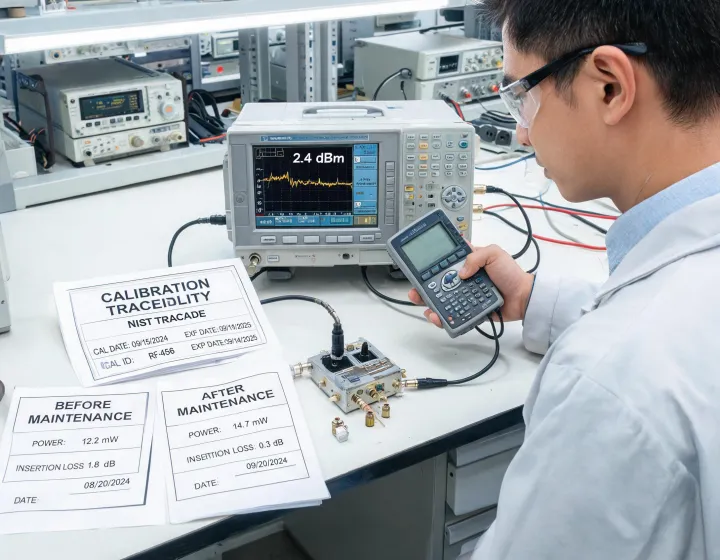
Energy, leak, heat-loss and process-drift decisions are often driven by a screenshot, a one-time reading or a vague maintenance note that cannot be repeated later.
Programs use a defined instrument, a stated accuracy range, a calibration record and a repeatable inspection routine so the improvement claim remains attached to the measurement method.
The visual calculator is a planning aid, not a guarantee. A facility team can enter an approximate inspection frequency, avoided downtime value and energy-loss estimate, but the output should be reviewed against the actual instrument, scan response, emissivity setting, gas sensor range or process transmitter class used on site. This framing protects the sustainability claim from becoming a marketing number disconnected from the field reading.
For example, a thermal-imaging program may highlight heat loss in an electrical cabinet, while a gas monitoring program may document a leak response trend. Both can support resource and safety goals, but they need different data capture methods and different acceptance rules. The same traceability posture used for product quality should also apply when a company reports efficiency gains or maintenance improvements.
Attach each record to the instrument serial number, calibration date and measurement condition before using it in a sustainability report.
Industrial Maintenance teams use multimeter, clamp meter and thermal-imaging programs for predictive maintenance and energized-work safety. When inspection records are stored with temperature condition and instrument status, avoided downtime claims can be reviewed later.
Environmental & Gas Monitoring Instruments support moisture, infrared temperature and gas detection checks. Claims should include sensor range, response time and calibration or bump-test evidence rather than assuming every detector response is identical.
Process instrumentation can track pressure, flow, level and temperature drift. Sustainability reporting becomes more credible when a transmitter record includes range, output, annual drift expectation and service notes.
Share the inspection process, device family and reporting goal. The response will identify which measurement evidence belongs in the efficiency or maintenance file.